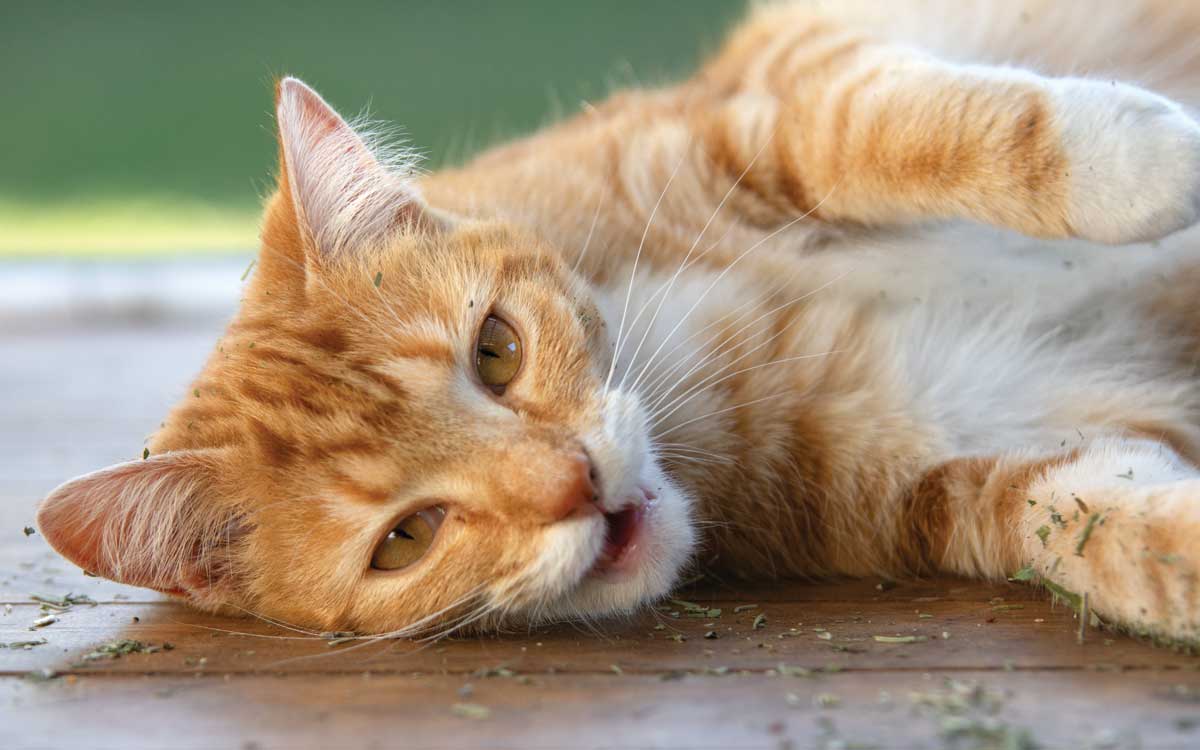
There’s nothing quite like a cat who’s discovered catnip. In that moment, they’re in absolute cat nirvana – rolls, rubs, wild zoomies, and pure feline bliss. But have you ever wondered why this happens? What is it about this unassuming plant that turns even the most dignified cat into a playful goofball?
What is catnip?
Catnip, also known as Nepeta cataria, is a perennial herb from the mint family. If you’ve ever grown mint in your garden, you’ll recognise the square stems and the way it spreads enthusiastically (sometimes too enthusiastically). Native to Europe, Asia, and Africa, catnip was brought to North America by settlers and now grows wild in many areas.
The plant itself is fairly unremarkable to look at – grey-green leaves, small white or purple flowers, and that characteristic minty scent. But to cats? It’s pure magic.
Here’s something fascinating: catnip evolved to produce nepetalactone not to entertain cats, but to protect itself from insects. The compound works as a natural insect repellent that’s as effective as DEET, keeping bugs at bay while accidentally creating the world’s most popular cat drug.
The science behind why (most) cats love catnip
When a cat smells catnip, they’re detecting a compound called nepetalactone – a volatile oil found in the stems, leaves, and flowers of the plant. This compound binds to receptors in a cat’s nose, which then sends signals to their brain that stimulate areas related to mood and behaviour.
Think of it as nature’s way of triggering a temporary euphoric state. The nepetalactone molecules are thought to mimic cat pheromones, which explains why cats respond with behaviours similar to those seen during mating season– rolls, rubs, and general excitement.
What’s brilliant is that this “high” is completely harmless and non-addictive. It’s simply a sensory experience that taps into your cat’s natural instincts and reward system.
Not all cats respond to catnip
Here’s the catch: catnip affects approximately two-thirds of domestic cats. That means about one in three cats won’t respond at all, and that’s completely normal.
Why? The response to catnip is hereditary. Your cat either has the genetic makeup to detect and respond to nepetalactone, or they don’t.
Additionally:
- Kittens under 6 months typically don’t respond to catnip, regardless of genetics. They need to reach sexual maturity before the response kicks in.
- Older cats may show less interest or a milder response compared to their younger years.
- Some cats simply have individual preferences – just like people with food, not every cat finds catnip appealing.
If your cat is part of the non-responder club, don’t worry. There are brilliant alternatives (more on that below).
Is catnip safe for cats?
Catnip is considered safe for cats (and kittens) to enjoy in small amounts. It is not toxic and won’t cause any long-term harm to your cat. However, for some cats, consuming large amounts can cause digestive upset, such as vomiting or diarrhoea. Cats can develop a tolerance to catnip if they are exposed to it frequently, so it’s a good idea to use it in moderation.
The key is to use catnip strategically – as enrichment, during play sessions, or to encourage use of new scratchers and toys.
How to use catnip effectively
Catnip comes in several forms, each with its own benefits:
Fresh catnip
If you have a green thumb, catnip is easy to grow. It loves full sun and water, though the hard part is to keep your cat away from the plant! Once established, it seeds easily and spreads. Fresh catnip is potent and can be offered directly to your cat or dried for later use.
Dried catnip
This is the most common form. Happy Nip dried catnip can be:
- Sprinkled on The Scratch Box to encourage proper scratches
- Added to toys to revive interest
- Placed in favourite lounge spots to create positive associations
- Offered directly for your cat to roll in
Catnip sprays and bubbles
These are convenient for on-the-go enrichment or to refresh old toys. They’re less potent than dried catnip but still effective.
Toys stuffed with catnip
Pre-made toys offer convenience and often combine catnip with engaging textures and shapes.
Storage tip: Catnip loses potency over time, so store it in an airtight container away from light and heat for maximum freshness – and maximum enjoyment.
6 creative ways to use catnip
Beyond the obvious “sprinkle and watch chaos ensue” approach, here are some clever ways to use catnip:
- Encourage proper scratches: Sprinkle Happy Nip on The Scratch Box or other scratch posts. This creates a positive association and redirects your cat away from furniture.
- Make training easier: Want your cat to use a new bed or climb a new cat tree? A bit of catnip can make the new item irresistible.
- Increase activity levels: For lazy or overweight cats, catnip can spark play and movement. Sprinkle it in areas where you want to encourage activity.
- Reduce stress: While catnip initially causes excitement, the post-euphoria period often brings relaxation. This can help anxious cats feel calmer.
- Revive old toys: Place forgotten toys in an airtight container with catnip overnight. The next day, they’ll smell fascinating again.
- Create scavenger hunts: Hide small amounts of catnip around the house for your cat to discover during their daily patrol.
What if my cat doesn’t respond to catnip?
If your cat is part of the 30-40% club who couldn’t be bothered with catnip, don’t worry – there’s a brilliant alternative that might be exactly what your cat needs.
Valerian contains actinidine, a compound that acts as a stimulant for many cats. While the effects are similar to catnip (think playful behaviour, rolls, rubs, and general excitement), it works through different receptors.
Many cats who ignore catnip completely will go wild for valerian. Some cats even prefer valerian over catnip, regardless of whether they respond to both.
The effects can last anywhere from 5-30 minutes, often slightly longer than catnip. Like catnip, valerian is completely safe and non-addictive. You can use Mellow Meow the same way you’d use catnip: simply sprinkle it onto The Scratch Box, add it to toys, or offer it directly for your cat to roll in.
Pro tip: Some cat owners find the scent of valerian root quite strong (it’s been described as earthy or even slightly pungent), but cats absolutely love it. Don’t let the smell put you off – your cat’s opinion is what matters!
For a deeper dive into valerian root and how it compares to catnip, check out our full article on Mellow Meow valerian root.
FAQs
Why do cats love catnip?
Cats love catnip because it contains nepetalactone, a compound that binds to receptors in their nose and triggers a euphoric response in their brain. The compound is thought to mimic cat pheromones, which cause behaviours similar to mating season. It’s a harmless, temporary sensory experience that taps into their instincts.
Do all cats react to catnip?
No, about one-third of cats don’t respond to catnip at all. The response is hereditary and controlled by multiple genes. If a cat doesn’t have the right genetic makeup, they simply won’t detect or respond to nepetalactone. Additionally, kittens under six months typically don’t respond regardless of genetics, and older cats may show diminished interest.
How long does catnip last for cats?
The active effects of catnip typically last between 5-15 minutes. After this period, cats experience “olfactory fatigue”, where their nose receptors become temporarily desensitised to the compound. Cats need a break of 30 minutes to an hour before they can experience the effects again if re-exposed to catnip.
Is catnip safe for kittens?
Yes, catnip is safe for kittens, but they won’t respond to it until they’re about six months to one year old.
Can cats overdose on catnip?
No, cats cannot dangerously overdose on catnip. However, if a cat consumes a large amount, they might experience mild digestive upset such as vomiting or diarrhoea. These effects are temporary and not harmful. The bigger concern with overuse is tolerance, as frequent exposure can make cats less responsive to catnip over time.
How often should I give my cat catnip?
Always use catnip in moderation. Once or twice a week is ideal for most cats. This prevents tolerance build-up and keeps the experience novel and exciting. Think of catnip as a special treat or enrichment tool rather than an everyday occurrence.
What’s the best way to store catnip?
Store catnip in an airtight container away from light, heat, and moisture to preserve its potency. Dried catnip loses its effectiveness over time as the volatile oils evaporate. A sealed container in a cool, dark cupboard works best. Proper storage can keep catnip fresh and potent for several months.
Can humans use catnip?
Yes, catnip has been used in herbal medicine for centuries. Unlike its stimulating effect on cats, catnip typically acts as a mild sedative for humans. It’s been used in herbal teas to promote relaxation, ease digestive issues, and help with sleep. However, the effects on humans are much subtler than the dramatic response seen in cats.
Why does my cat eat catnip?
Some cats prefer to eat catnip rather than just smell it. When eaten, catnip often produces a more calming effect rather than the hyperactive response seen with sniffing. This is perfectly safe in small amounts. However, if your cat eats too much, they might experience mild digestive upset. Most cats self-regulate and stop before this happens.
Can I grow catnip at home?
Yes, catnip is easy to grow and thrives in full sun with regular water. It’s a hardy perennial that spreads readily through seeds. The challenge is to keep your cat away from the plant if they’re a responder! Consider a hanging basket or a protected garden spot. Once established, you can harvest leaves to dry for later use or offer fresh to your cat.
This post was last updated on 25 October 2025.